The Rise of “Behavior-Based Insurance”: How Your Actions Are Becoming Your Premium
Insurance is undergoing a quiet but powerful shift. Instead of pricing policies based only on who you are—your age, location, or history—insurers are increasingly pricing based on what you do. This trend, known as behavior-based insurance, is rapidly gaining traction as technology makes real-time data easier to collect and analyze.
What Is Behavior-Based Insurance?
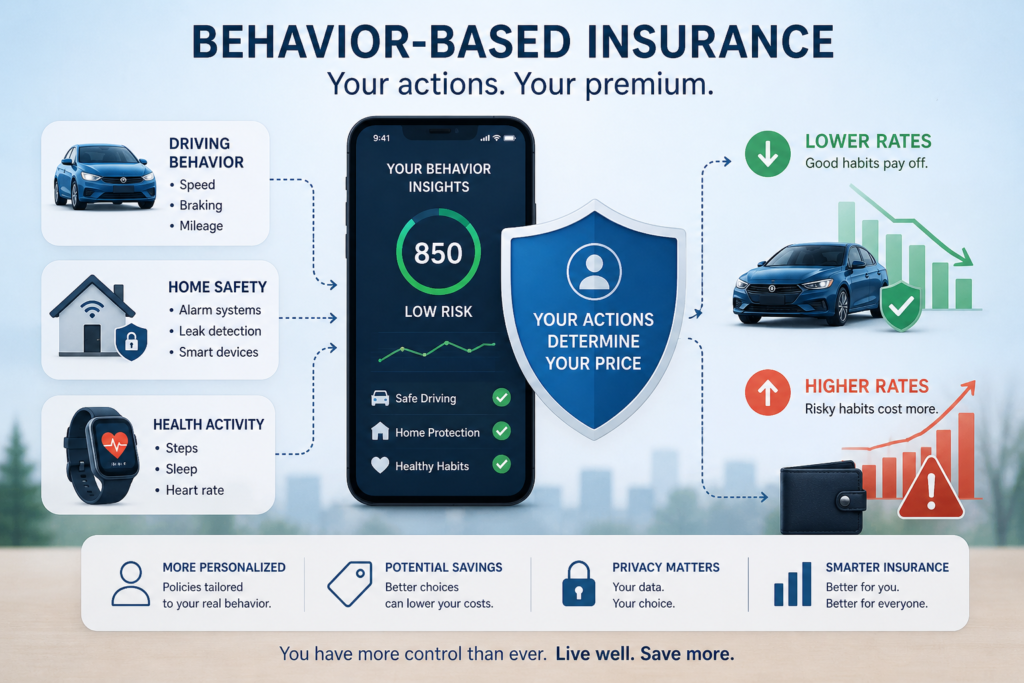
Behavior-based insurance uses data from everyday activities to determine risk more precisely. For example:
- Driving behavior (speed, braking, mileage)
- Home safety habits (alarm systems, leak detection)
- Health activity (steps, sleep, heart rate from wearables)
Advances in artificial intelligence allow insurers to analyze these data streams and predict risk more accurately than traditional models ever could.
Why This Trend Is Accelerating
Several recent industry observations and studies highlight why this model is expanding so quickly:
1. Rising Insurance Costs Are Forcing Innovation
Insurance premiums have been climbing significantly across the board. Home insurance alone has seen sharp increases—around 20% in a single year in some studies and nearly 78% over six years.
At the same time, auto insurance prices have jumped more than 20% in just one year.
Insurers are under pressure to price risk more accurately, and behavior-based models help them do exactly that.
2. Climate and Risk Volatility
Severe weather events and natural disasters are becoming more frequent and expensive, contributing to higher claims and premiums.
Globally, insured catastrophe losses are expected to exceed $100 billion annually, forcing insurers to rethink traditional pricing methods.
3. Technology Makes Personalization Possible
Telematics and AI-powered underwriting tools now allow insurers to track real-time behavior and adjust pricing dynamically.
This shift marks a move from static risk models to continuous, data-driven assessment.
What This Means for Consumers
Behavior-based insurance creates a new reality for policyholders:
- Safer behavior can lower your costs – Good driving or healthy habits may lead to discounts.
- Risky behavior becomes more visible – Insurers can price in habits that were previously hidden.
- Privacy becomes a trade-off – More savings often require sharing more personal data.
In essence, insurance is becoming more individualized—rewarding responsibility but also increasing scrutiny.
The Bigger Picture
This shift reflects a broader transformation in the insurance industry. Premiums have been rising globally, with some segments increasing around 8% annually in recent years.
At the same time, consumers are becoming more price-sensitive, with nearly half considering switching providers due to rising costs.
Behavior-based insurance sits at the intersection of these trends: it helps insurers manage risk more precisely while offering consumers a sense of control over their premiums.
Final Thought
Insurance is no longer just a static safety net—it’s becoming a dynamic system that reacts to your daily life. Over the next few years, the question won’t just be “What coverage do you have?” but “How do you live?”
And increasingly, your answer will determine what you pay.