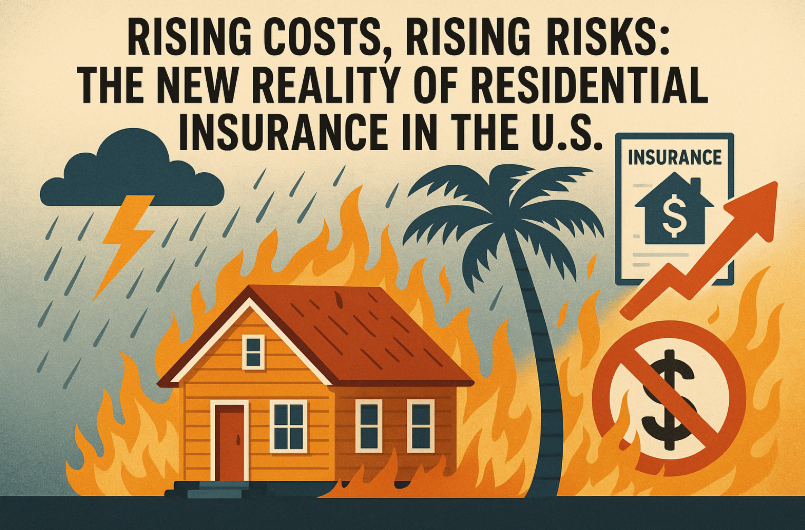
Residential insurance in the U.S. is undergoing significant changes, driven by escalating climate-related disasters and rising rebuilding costs. Between 2020 and 2024, homeowners insurance premiums surged by 50% nationwide, with policy cancellations doubling during the same period . In 2024 alone, homeowners faced an average 17.4% premium increase for new policies, compared to 11.6% in 2023 . States like California and Florida have been particularly affected; for instance, State Farm received approval for a 17% rate hike for California homeowners starting June 2025, following substantial wildfire-related losses .
The increasing frequency of severe weather events has led to a rise in catastrophic claims, which accounted for 46% of personal property claims in 2023—a record high over the past seven years . This surge in claims has prompted insurers to reassess their risk models and, in some cases, withdraw coverage from high-risk areas. Consequently, homeowners in these regions face challenges in securing affordable insurance, with some turning to state-backed plans like California’s FAIR Plan, which has seen a significant increase in enrollment . As the insurance landscape continues to evolve, homeowners are encouraged to stay informed about policy changes and explore options to mitigate risks associated with climate-related events.